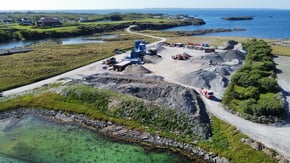
Wind power construction has expanded rapidly over the past decade worldwide. Wind turbine projects require large-scale concrete foundations capable of carrying high static and dynamic loads while maintaining long-term durability. For this reason, concrete batching plants play a critical role in wind energy construction. Concrete is essential for wind turbine foundations due to its high compressive strength, long service life, and resistance to harsh environmental conditions. These properties make it a reliable material for large energy infrastructure projects where performance over several decades is required.
.png?width=1920&height=1080&name=Nimet%C3%B6n%20malli%20(9).png)
Mass concrete pour for a wind turbine foundation on site
Wind turbine foundation design and concrete volumes
A wind turbine foundation is typically a massive reinforced concrete structure designed to transfer loads from the tower and turbine into the soil while ensuring stability under extreme wind conditions. A typical gravity foundation requires approximately 1,000–1,500 m³ (1,300–2,000 yd³) of concrete, with structural thickness reaching several meters at its deepest points.
Mass concrete pours of this size are usually carried out as continuous operations lasting 12–20 hours. This requires uninterrupted concrete production, consistent output, and strict quality control. Even small variations in concrete composition or temperature can affect structural strength and long-term durability.
Tecwill’s Cobra and Arcamix modular concrete batching plants are designed for these conditions, where continuous production and consistent mix quality are essential.
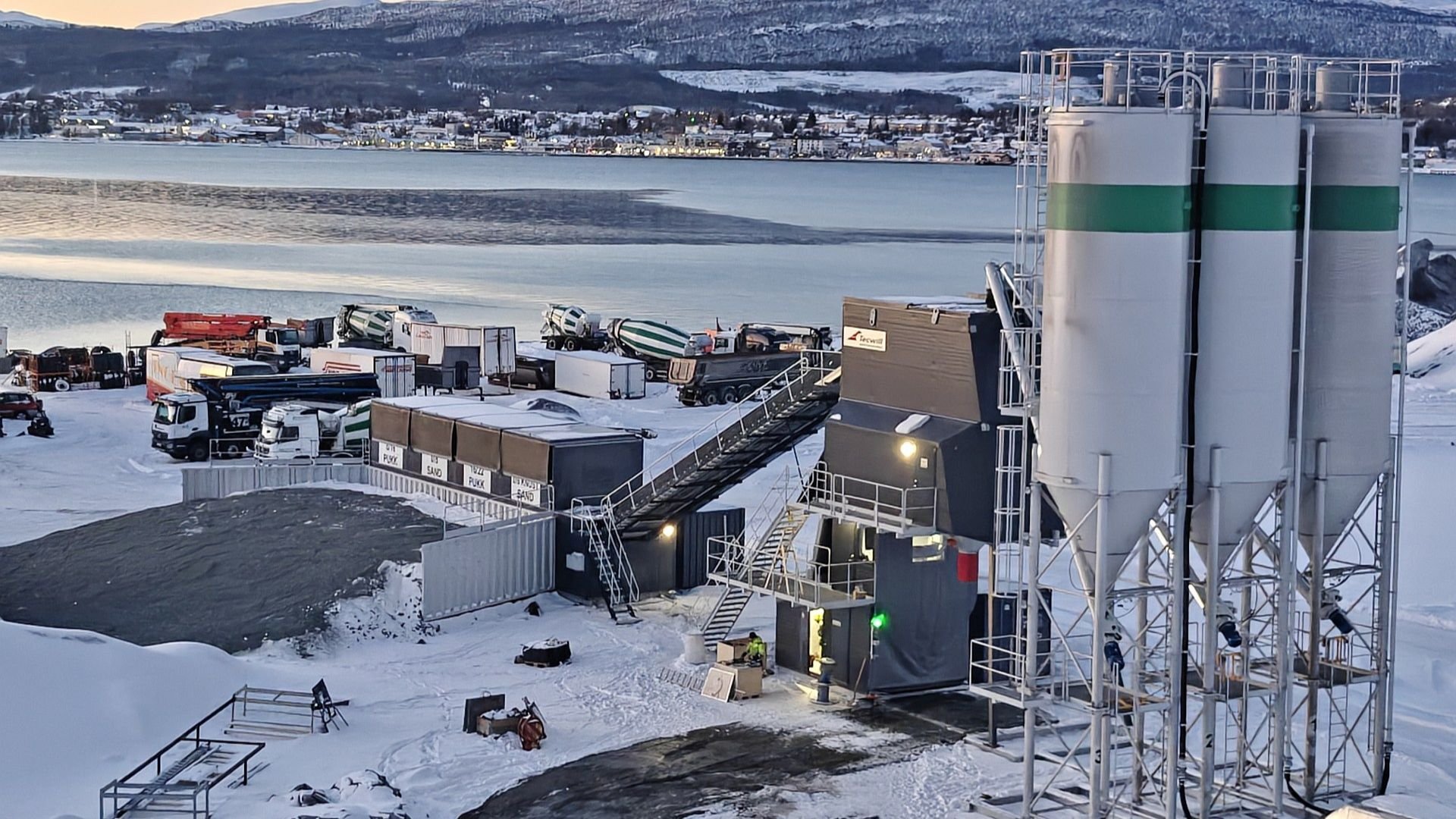
Tecwill concrete batching plant for reliable and continuous production in demanding site and weather conditions
Case example: 1,100 m³ of concrete per day for wind foundations
In a wind power project completed last summer, a portable Arcamix wet batch plant was used to cast one wind turbine foundation per day. This required a daily production volume of approximately 1,100 m³ (1,440 yd³) of concrete.
Concrete production remained stable throughout the project, and all foundations were completed according to schedule without any production interruptions. The project also achieved low concrete temperature variation, which is especially important in mass concrete structures. Controlled temperature reduces internal stress, lowers cracking risk, and improves long-term durability.
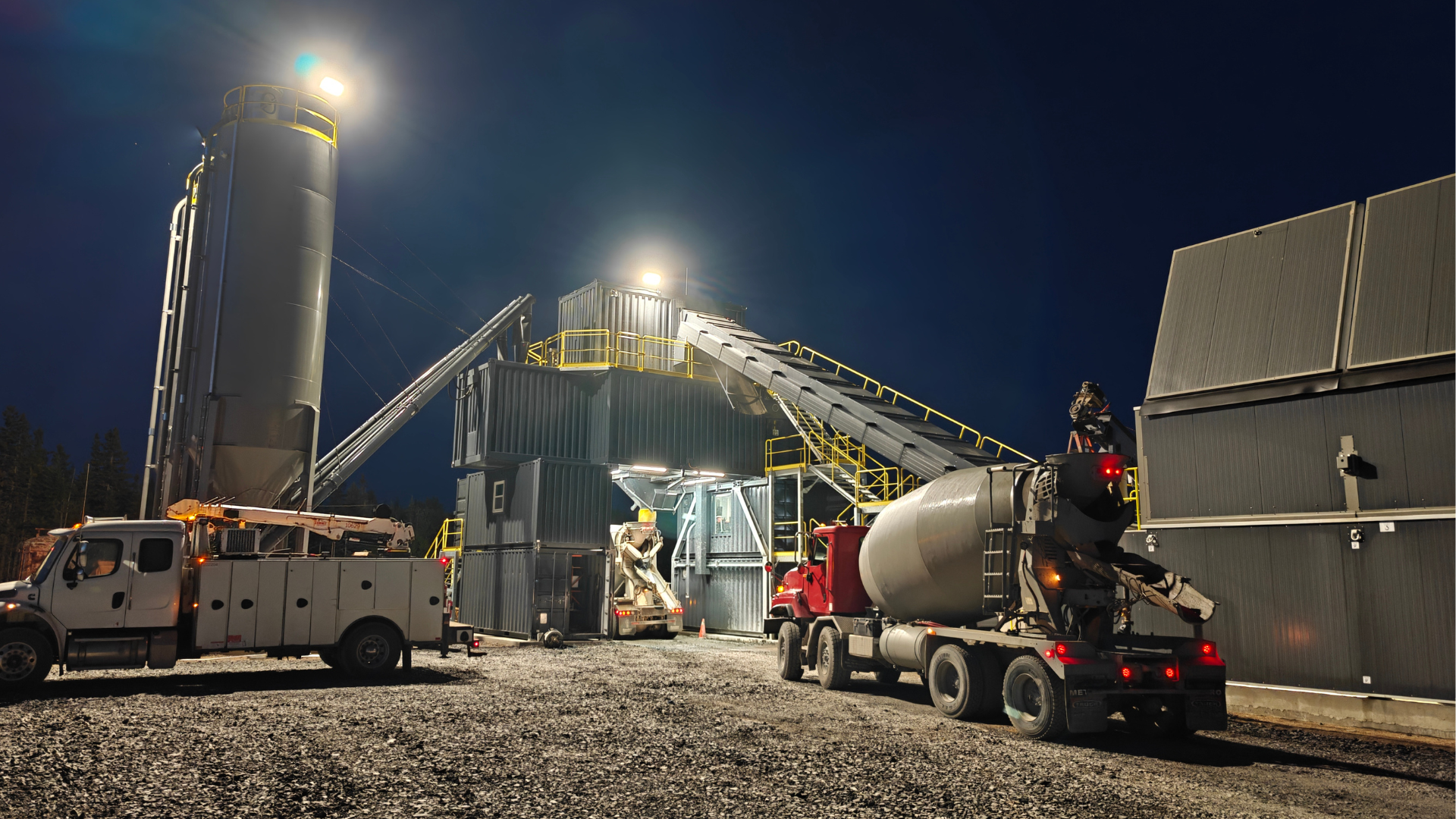
The Arcamix batching plant maintaining continuous production
Concrete temperature control in variable climate conditions
Wind farms are often built in remote locations where seasonal weather conditions vary significantly. High summer temperatures can increase initial concrete temperature, while winter conditions affect aggregates, water, and the overall batching process.
Casting wind turbine foundations requires precise concrete temperature control. Cement hydration generates heat, and excessive temperature rise can increase cracking risk and reduce structural performance.
Tecwill’s AI-driven dosing and weighing system adjusts concrete production in real time based on operating conditions. This ensures consistent concrete quality and batch to batch repeatability, even during high-volume production.
Key benefits:
-
Consistent concrete quality during long, continuous pours
-
Accurate and repeatable weighing and aggregate moisture control
-
Efficient use of raw materials through automatic dosage optimization
-
Automatic temperature control of concrete
-
Automatic fiber dosing with steel fibers, polypropylene fibers or synthetic fibers
In this project, temperature control was a key success factor:
-
Summer conditions: automated flake ice dosing reduced concrete temperature by up to 10°C (18°F) without the need for a local ice plant.
-
Winter conditions: the batching plant operated fully enclosed and heated, with automatic aggregate and water heating
As a result, concrete temperature remained within target limits throughout production, reducing cracking risk and enabling safe mass concrete pours in challenging weather conditions.
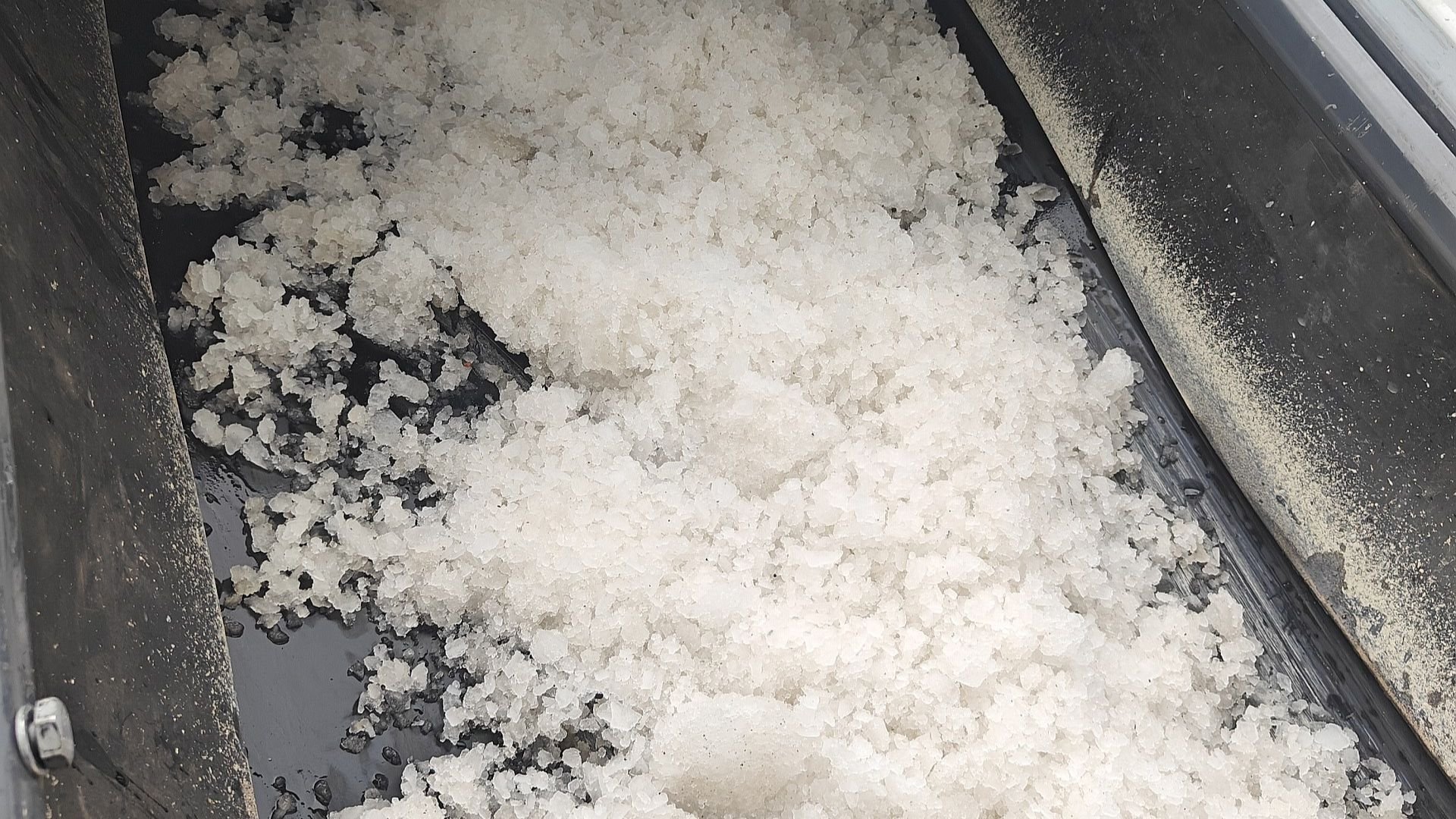
Flake ice used to control concrete temperature
On-site concrete production with modular batching plants
Wind farms are frequently located in remote areas where permanent concrete production facilities are unavailable. Long haul distances increase temperature-related risks and can compromise concrete quality.
Tecwill’s modular and mobile concrete batching plants allow concrete production to be located directly at or near the construction site. This approach minimizes logistical risks and provides better control over the pouring process.
Key advantages of Tecwill portable concrete batch plant:
-
Preassembled and pre-wired for quick setup
-
Plug-and-produce installation, minimal foundations, wiring, and site work
-
Factory-enclosed structure, no separate building required
-
Precise concrete temperature control for consistent results in both hot and cold conditions
-
Automatic slump control for wet-batch concrete
-
Consistent throughput and repeatable batch quality
-
Quick mixing cycles for high-performance concrete
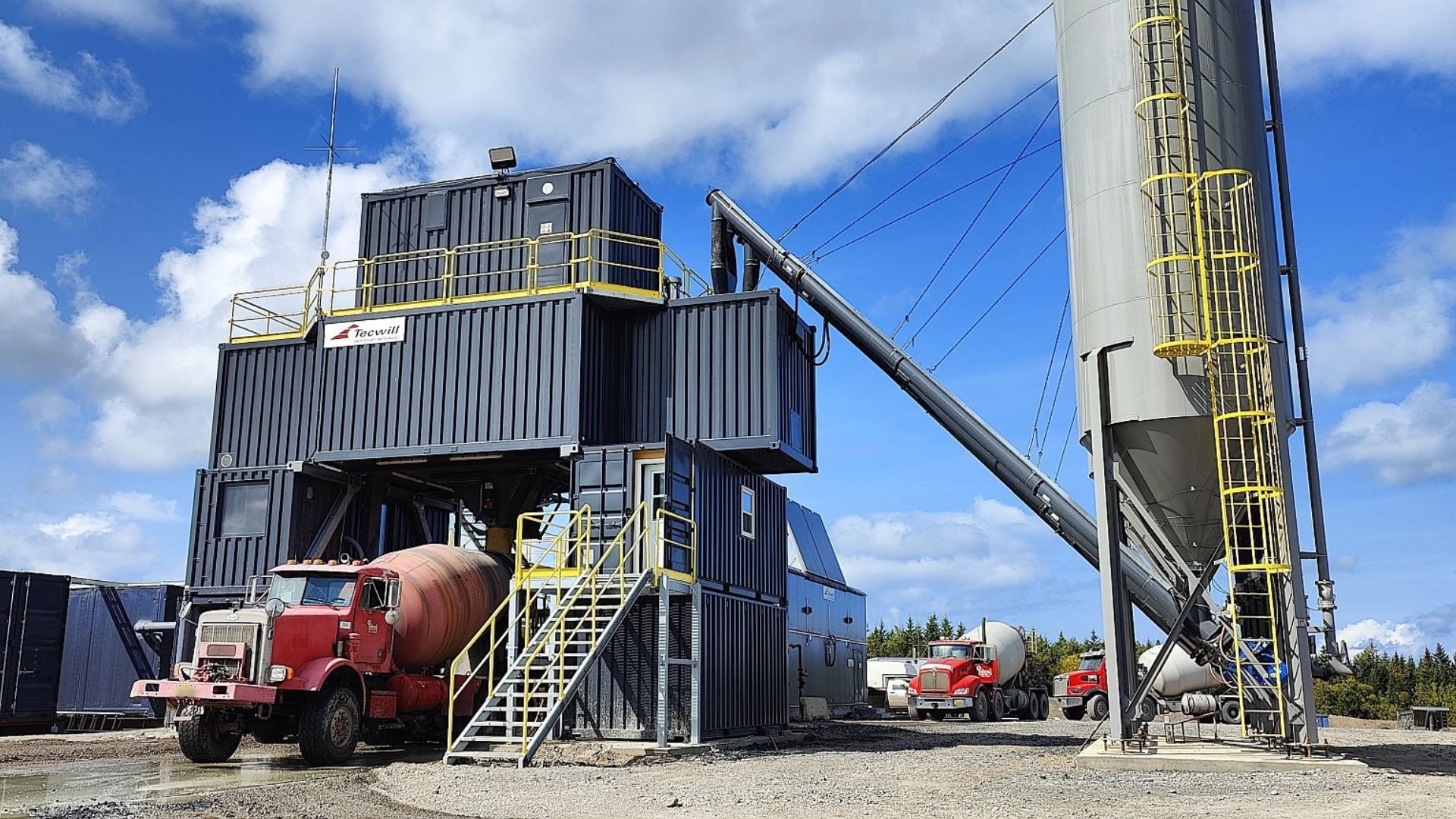
On-site concrete production for wind farm construction
Frequently Asked Questions
Q: What type of concrete batching plant is best for wind turbine foundation projects?
A modular or mobile concrete batching plant installed close to the wind farm site is usually the best choice. On-site production supports continuous pours, reduces transport risks, and allows the plant to be relocated between turbine positions as the project progresses.
Q: How much concrete does a wind turbine foundation require?
A typical gravity foundation requires 1,000 to 1,500 cubic meters of concrete, depending on turbine size, soil conditions, and structural design. Production must remain stable throughout the entire pour - any interruption risks cold joints or quality inconsistencies in the finished structure.
Q: Why is concrete temperature control critical in wind turbine foundation construction?
Temperature control reduces thermal stress and lowers the risk of cracking in mass concrete foundations. This is especially important during cold Nordic winters or hot summer pours. Batching plants with aggregate heating or chilling systems give contractors direct control over fresh concrete temperature before it reaches the formwork.
Q: What output capacity does a batching plant need for wind turbine foundation work?
A plant producing 60 to 120 m3 per hour is typically sufficient. Higher capacity reduces total pour time and lowers cold joint risk - particularly important when weather windows are limited or the pour must be completed within a strict timeframe.
Q: How do contractors manage heat of hydration in large foundation pours?
Heat of hydration is controlled through mix design, placement temperature management, and post-pour insulation or cooling. Using low-heat cement blends, limiting cementitious content, and controlling fresh concrete temperature at placement all help reduce peak internal temperatures in mass concrete foundations.
Q: Can a mobile batching plant be reused across multiple foundations on the same wind farm?
Yes. Mobile and modular plants are built for repeated relocation within a project site. Once one foundation is cast, the plant moves to the next turbine location - keeping the same mix design and quality standards consistent across every foundation on the wind farm.