For many concrete plant operators, producing fiber-reinforced concrete or fibercrete (shotcrete with fibers) can be a daunting task. The challenges associated with incorporating fibers into concrete - fiber clumping, extended mixing times, and wear on mixing equipment - can make this process anything but smooth.
Fortunately, there is a proven solution to these common issues: the on-conveyor fiber feed system. This post walks through the core production challenges, the dosing ranges that matter for steel and synthetic fibers, and how automated dispensing resolves the bottlenecks that manual handling cannot.
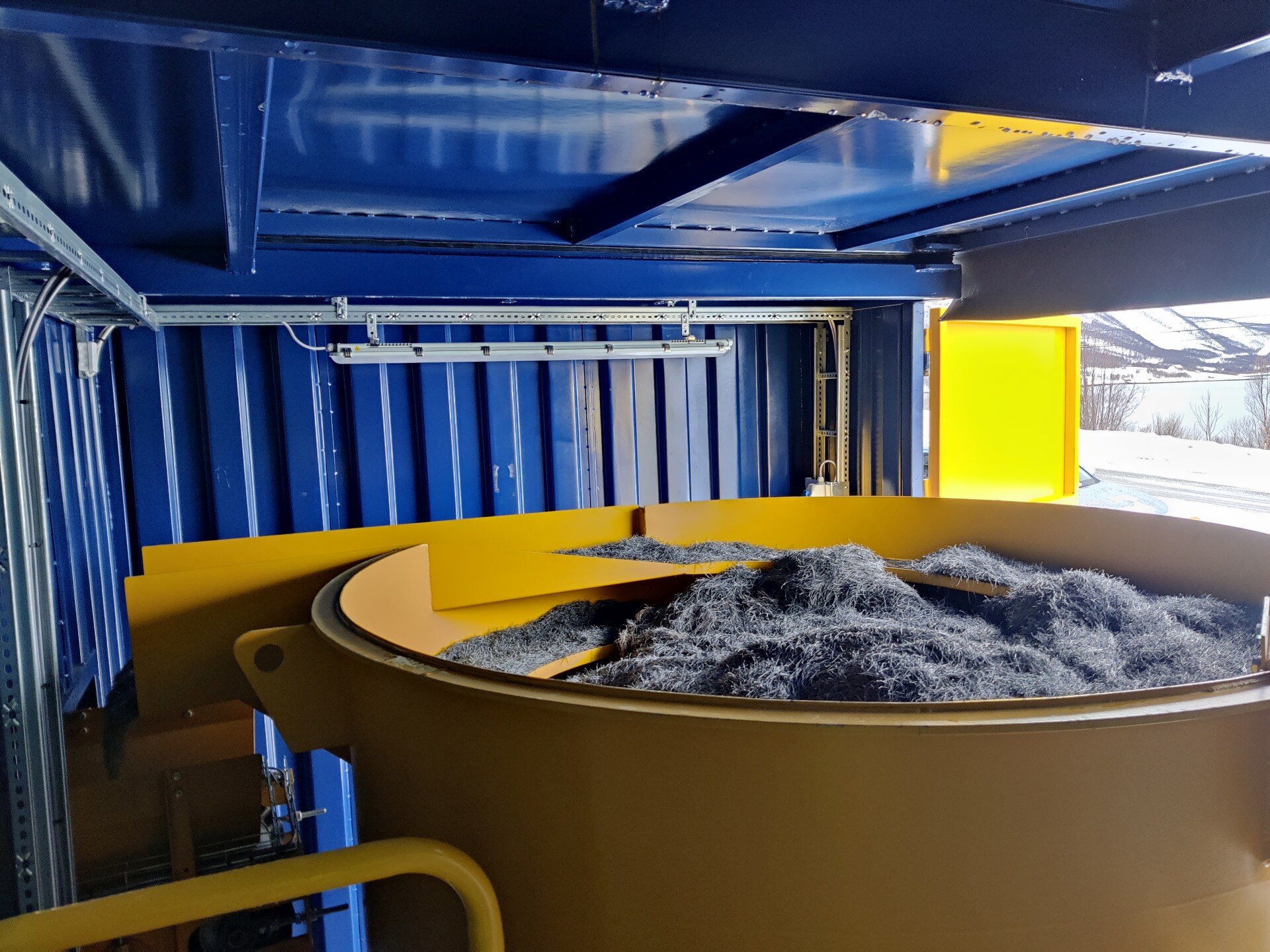
Steel fiber dispensing unit ready for automatic production.
Challenges to fiber concrete production
Fiber-reinforced concrete is valued for its enhanced durability, improved crack resistance, and superior performance in demanding applications like tunnel linings and shaft sinking.
However, achieving a high-quality fiber concrete mix involves precise control over several factors, including the accurate dosing of materials, maintaining the correct slump, and the uniformity of the mix.
Traditional methods of dispensing fibers into concrete often lead to:
- Extended mixing times - fibers added by hand require longer mixing cycles to achieve even distribution, which reduces plant throughput and increases operational costs.
- Uneven fiber distribution - without controlled feed rates, fibers tend to clump before they disperse. Once a ball forms in the mixer, it rarely breaks apart fully, leaving localized zones of weakness in the hardened concrete.
- Fiber clumps during spraying - clumps that survive the mixing process cause blockages and inconsistencies at the nozzle, disrupting shotcrete application and affecting final quality.
- Inconsistent dosing - manual bag addition depends on the operator counting correctly at the right point in the mixing sequence. On a busy plant, that is a variable you cannot reliably control.
Fiber dosing ranges that define the process
Fiber type and dosage rate drive everything downstream: mixer selection, cycle time, workability targets, and the precision required from your dispensing system. Getting the dosing range wrong - or letting it drift - means the structural performance you specified on paper does not show up in the finished element.
The system handles both steel and synthetic fibers, which behave very differently in production:
Steel fibers
Steel fiber dosages in structural and shotcrete applications typically fall in the range of 24 to 77 kg/m3, depending on the performance class required. For permanent tunnel linings and structural shotcrete, 30 to 40 kg/m3 is a common specification target. At these rates, hooked-end or crimped steel fibers need to be introduced gradually and mixed thoroughly to prevent balling.
Synthetic and polypropylene fibers
Macro-synthetic fibers used as structural reinforcement typically dose at 3 to 9 kg/m3. Micro-synthetic fibers for crack control and fire resistance in shotcrete sit lower, around 0.6 to 1.8 kg/m3. The lower mass makes them easier to handle than steel, but they are more susceptible to clumping in humid conditions and require even dispersion to perform as specified.
When different fiber types are used in the same plant, the fiber unit can be configured with several separate dosers to handle each type independently.
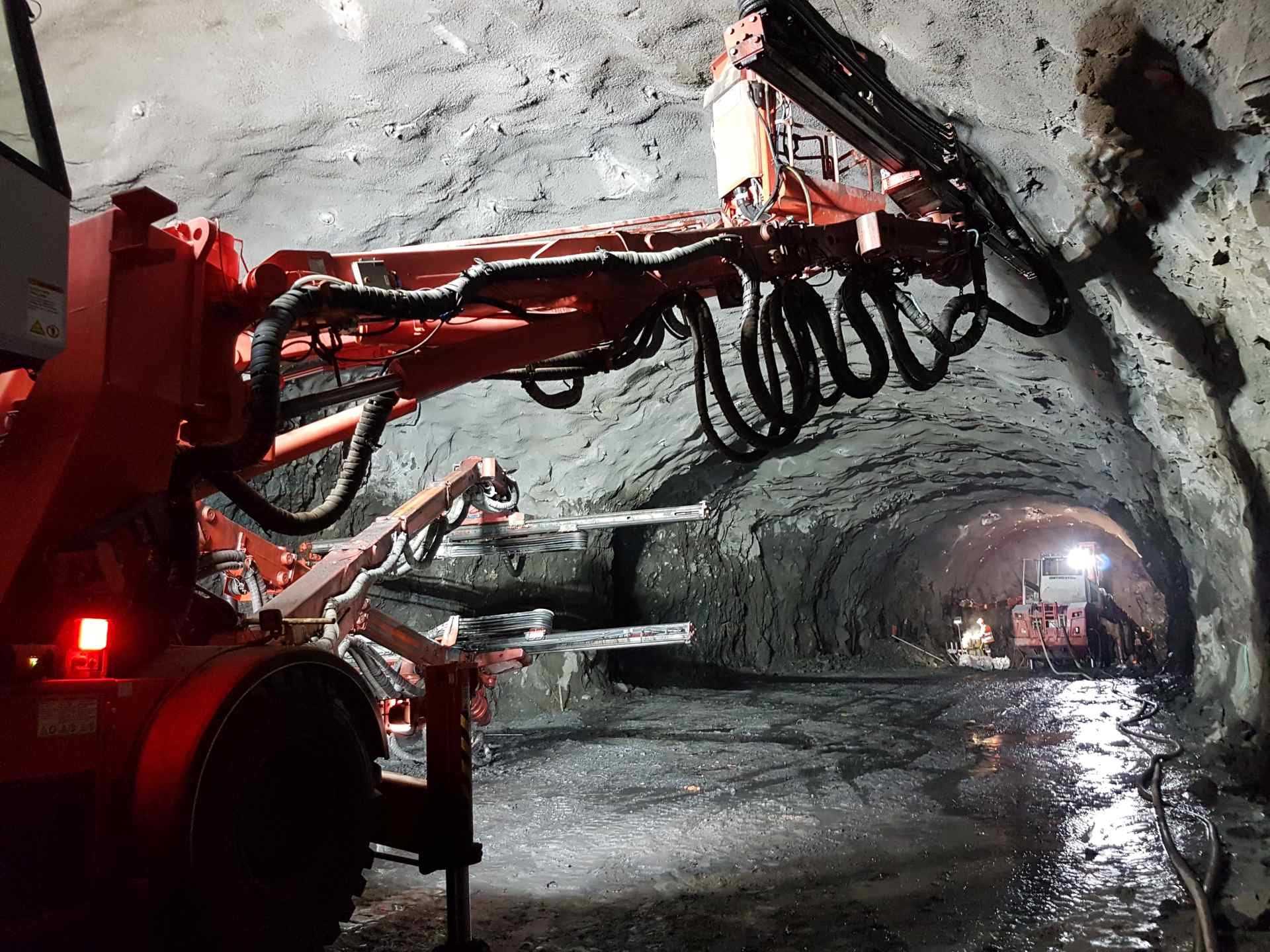
Fiber-reinforced concrete fibercrete (shotcrete) is widely used in tunnel linings and shaft sinking.
An innovative approach to fiber dispensing
Tecwill's on-conveyor fiber feed system addresses these challenges directly, providing simultaneous and precise dosing of fibers and aggregates during the concrete batching process. The result is a homogenous mix with fibers evenly distributed throughout.
The system is fully automated and can handle steel, synthetic, or polypropylene fibers. The exact amount of fibers is dosed directly onto the moving aggregate flow using Tecwill's "flying" aggregate weighing system. Pre-mixing the fibers with the aggregates during the dosing process delivers several significant benefits:
- Shorter mixing time - because the fibers are premixed with the aggregates, the overall mixing time is reduced. This increases plant capacity and lowers operational costs.
- Reduced mixer wear - shorter mixing cycles reduce wear on the mixer, leading to longer equipment life.
- Correct slump - shorter mixing times reduce the risk of altering the slump, keeping workability within the desired range. Precise dosing also prevents over- or under-dosing that could affect the mix.
- Improved concrete quality - the premixing process ensures consistent fiber distribution throughout the concrete, eliminating fiber clumps and delivering superior shotcrete quality.
- Fewer spraying issues - with fewer fiber clumps, the shotcrete spraying machine runs more smoothly, leading to better results and less downtime.
- Less cement used - a well-mixed concrete blend effectively reinforced with fibers requires less cement to achieve the same structural performance as traditional mixes.
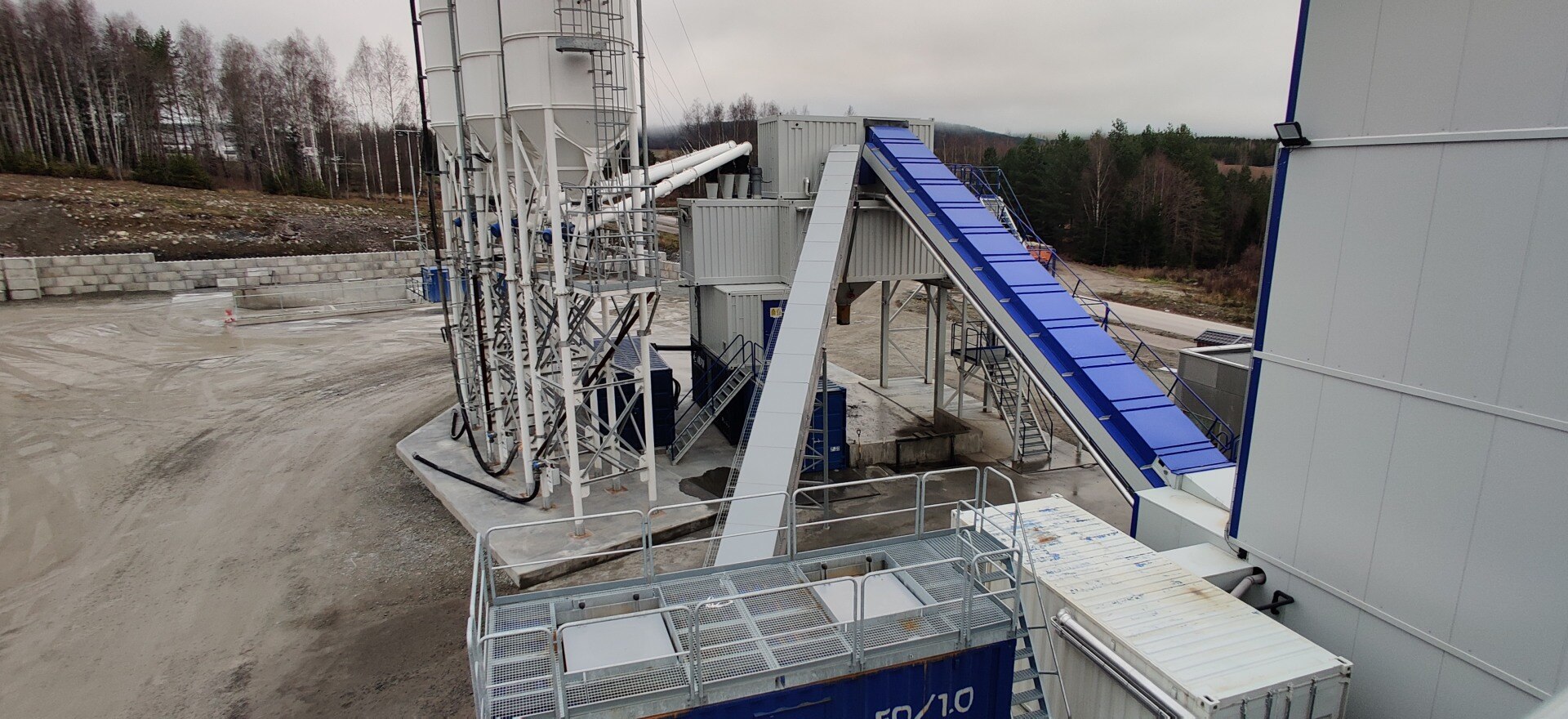
When different types of fibers are used, the fiber unit can have several separate dosers.
Meeting high-demand mining and tunneling projects with confidence
Precise and automated fiber dosing technology optimizes the entire production process. By integrating fiber dispensing into the progressive batching system, concrete producers achieve higher-quality shotcrete while reducing operational costs, using less cement, and lowering CO2 emissions. The result is a more efficient and sustainable production process that meets the demands of modern mining and construction projects.
The challenges of fiber concrete production do not have to be a source of frustration. With today's solutions, concrete plant operators can take on even the most demanding projects with ease and confidence.
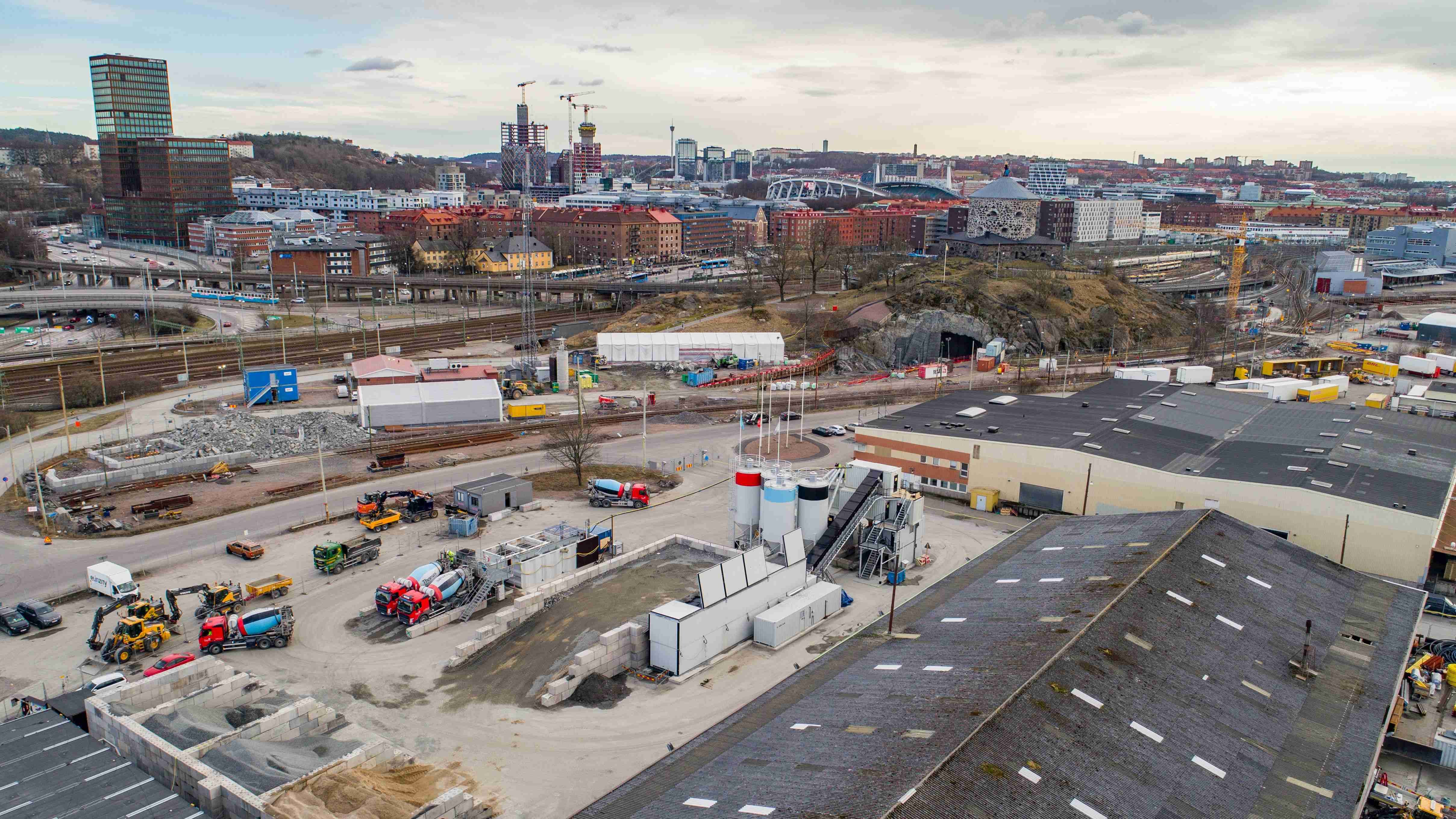
At peak times, 1,200 m3 of concrete was produced daily for an underground railway station project down town.
Ready to take manual fiber handling out of the equation? Contact Tecwill to discuss how our fiber dosing system integrates with your plant setup, or learn more about the fiber dispensing system.
Frequently asked questions
What types of fibers can an automated dosing system handle?
Automated fiber dosing systems like Tecwill's on-conveyor unit are designed to handle steel, synthetic, and polypropylene fibers. When multiple fiber types are used in the same plant, the unit can be configured with separate dosers for each type, so you do not need separate systems as mix designs change.
What is the typical dosage range for steel fibers in shotcrete?
Steel fiber dosages in structural shotcrete applications typically fall between 24 and 77 kg/m3. For permanent tunnel linings, 30 to 40 kg/m3 is a common specification target. The exact range depends on the performance class required and the project specification.
How does automated fiber dosing reduce mixing time?
When fibers are pre-mixed with aggregates on the conveyor before entering the mixer, the mixer only needs to complete the final blending stage. This is significantly faster than adding fibers directly into the drum and waiting for them to disperse, which reduces overall cycle time and increases plant throughput.
Does adding a fiber dosing system affect plant cycle times?
No - when integrated correctly into the batching sequence, automated fiber dosing adds no significant cycle time. The fiber feed runs in parallel with aggregate weighing, so the process does not create an additional step in the batch cycle.
Can the system be integrated with existing plant control software?
Yes. Tecwill's fiber dosing system integrates directly with the Cobra and Arcamix plant control platforms, and can be retrofitted into existing batching operations. Fiber addition becomes part of the automated recipe, with dosage logged for every batch.
Read case studies:
Case study about huge railway project
Mixing concrete for more than 1100 windmills of Europe’s biggest wind farm
Ask us more!