A concrete mixing plant can be installed in as little as a few days — or it can take several months. The difference depends mainly on plant type and the level of pre-assembly before delivery
|
Plant type |
Typical installation time |
|---|---|
|
Factory-preassembled plant |
3–8 days (commissioning included, under optimal conditions) |
|
Site-assembled plant |
2–6 months |
Factory-preassembled plants for fast installation
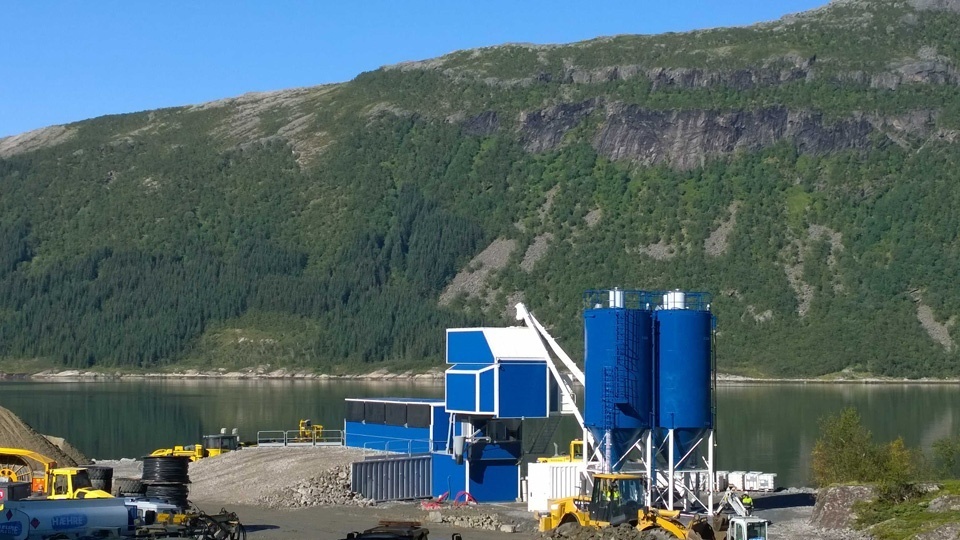
Preassembled mobile concrete mixing plants are engineered to minimize the amount of work required on site and to enable a fast transition from delivery to production. A significant share of the mechanical assembly, electrical installation, and system testing is completed already in the factory before shipment. This factory-based preparation improves installation predictability and reduces the need for extensive on-site assembly work, especially in demanding or time-critical projects.
Factory preparation typically includes:
- Mechanical preassembly of all plant modules
- Pre-wired low-voltage electricity, including lights, room heating, and maintenance receptacles
- Electrical wiring and automation system integration
- Calibration of sensors and control components
- Factory testing of core functions and production cycles
The result is a plug-and-produce setup: the plant arrives at the site in a largely verified and ready-to-connect condition. No separate building is required, and the enclosed factory structure reduces CAPEX compared to traditional open stationary plants.
On site, the installation work is typically focused on:
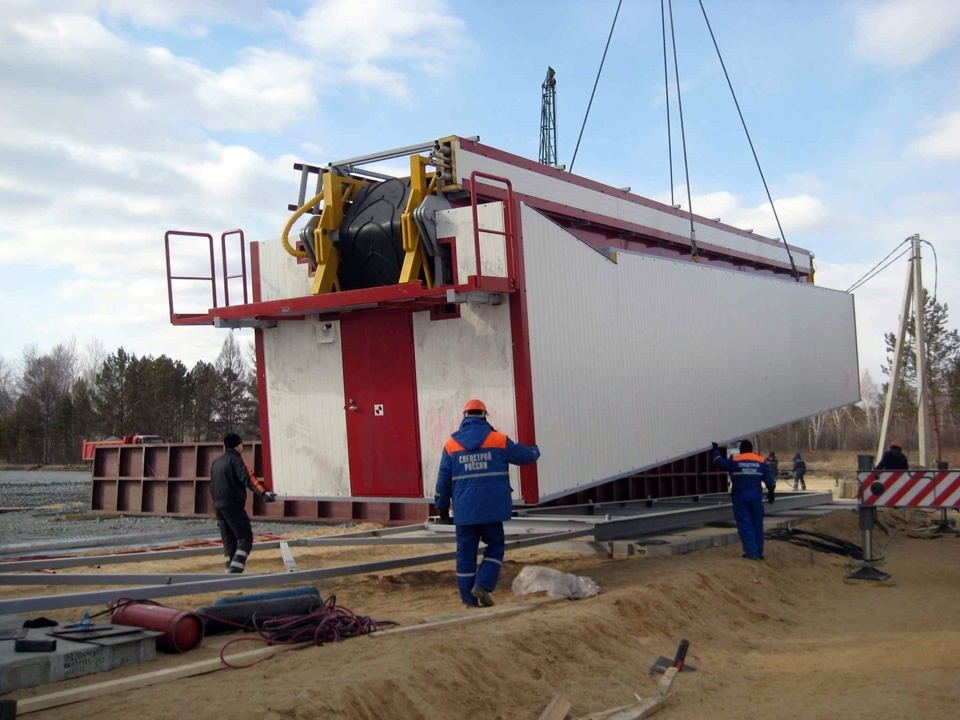
- Positioning and lifting of modules into final place
- Connecting utilities such as power, water, and compressed air
- Final system checks and commissioning procedures
Minimal foundations are required. Depending on site conditions, the plant can be installed on a concrete slab or steel beams, which further reduces civil works and setup costs.
When site conditions are well prepared, with completed foundations, available lifting equipment, and efficient logistics, installation can be completed within 3–8 days. This makes preassembled mobile plants particularly suitable for projects where minimizing downtime and achieving a fast production start are important.
Site-assembled plants require more time and resources
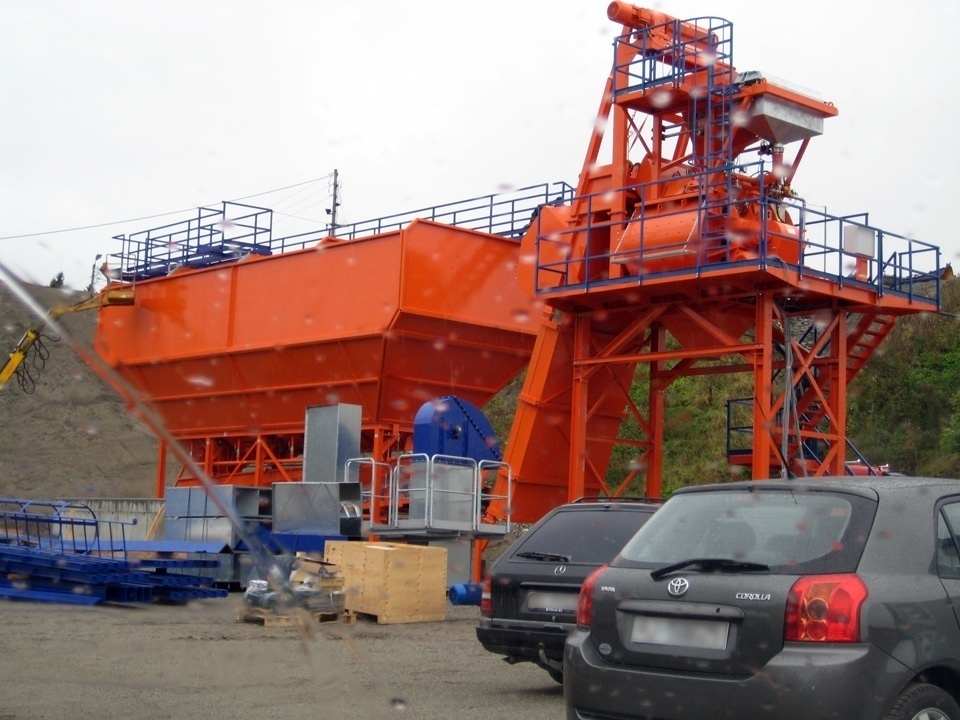
Site-assembled concrete plants require more on-site work and coordination compared with factory-preassembled solutions. Since a larger share of the plant is delivered as individual components, more installation activities must be completed directly at the project site.
Installation typically includes:
- Construction of concrete foundations and civil engineering works
- Assembly of aggregate storage systems and structural components
- Installation of electrical cabling and control systems
- Connection of utilities such as power, water, and compressed air
- Full commissioning and operator training
Because these tasks are carried out on site, the installation process is more dependent on local conditions, available resources, and project coordination. Depending on the scope of the project and site conditions, installation typically takes 2–6 months before the plant is fully ready for continuous production.
What causes installation delays?
In many projects, the main delays are not caused by the plant itself, but by site preparation.
The most common issues are:
- Foundation work not completed on time
- Delays in power, water, or utility connections
- Crane access and unloading constraints
- Weather and ground conditions
- Permits or local compliance requirements
- Calibration, commissioning, and operator training taking longer than expected
It is important to distinguish between installation and production readiness. A plant can be fully installed on site while commissioning activities are still ongoing.
Installation vs commissioning
Installation refers to the physical assembly and positioning of the plant on site. Commissioning includes system testing, calibration, automation setup, and operator training to ensure correct operation.
A plant may be installed quickly, but full production readiness depends on successful commissioning.
The fastest path from delivery to production
The single most important factor is how much of the plant is completed before it leaves the factory. Factory-assembled and factory-tested solutions, such as Tecwill concrete mixing plants, reduce on-site uncertainty and shorten the path from delivery to consistent production.
If you're planning a project and need a fast installation, Tecwill can help you choose the right plant configuration and define a realistic timeline based on your site conditions.
Frequently Asked Questions
How long does it take to install a concrete mixing plant?
A factory-preassembled plant typically takes 3–8 days, commissioning included. A fully site-assembled plant takes 2–6 months, depending on the scope of civil works and site conditions.
What is the fastest type of concrete plant to install?
Factory-preassembled mobile plants are the fastest because most of the mechanical assembly, electrical wiring, and system testing is completed at the factory before delivery. On site, the work is limited to positioning, connecting utilities, and commissioning.
What is the difference between installation and commissioning?
Installation refers to the physical assembly and positioning of the plant on site. Commissioning covers system testing, calibration, automation setup, and operator training. A plant can be fully installed while commissioning is still ongoing, so production readiness always takes longer than installation alone.
What causes installation delays on concrete batching plants?
The most common causes are incomplete foundations, late utility connections, crane access constraints, weather, permits, and commissioning taking longer than planned. In most cases, the plant itself is not the bottleneck - site readiness is.
Why do stationary plants take longer to install?
Stationary plants require concrete foundations, structural assembly, electrical cable runs, aggregate storage installation, and utility connections - all carried out on site. That adds significant time compared with a factory-preassembled setup where most of the work is done before delivery.